
What do full-spectrum light and the wavelengths that make up its spectrum represent?
04-09-2025
15:50

In our next article, LEDWisdom aims to share detailed information about the light spectrum and help you distinguish marketing methods used in the LED grow light market from proven, valuable information.
We can begin by simply defining two types of LEDs: monochromatic and polychromatic LEDs. Monochromatic LEDs produce light at a single wavelength, while polychromatic LEDs produce light with a profile, or spectrum, consisting of multiple wavelengths. The horticultural full-spectrum LEDs we use in our LEDWisdom WB150-R and WB340-R grow lights are examples of polychromatic LEDs, while the 660nm OSRAM OSLON® LEDs are examples of monochromatic LEDs. As can be seen in our product photos, the 660nm deep red LEDs produce light only in the color red, defined as deep red. Full-spectrum LEDs, on the other hand, produce white light and emit light across all visible wavelengths. Polychromatic LEDs are often designed to produce all wavelengths in varying amounts, allowing for a graph of their light intensity/wavelength ratio. This graph is called the light spectrum.
We wanted to explain the wavelengths that make up the spectrum and their characteristic effects on plants, based on a series of experiments conducted at the Michigan State University Department of Horticulture and a subsequent online publication.
The experiment aimed to prove that although the green light in our full-spectrum plant grow lights is considered the least efficient wavelength in the visible spectrum for photosynthesis, it still plays a role in plant photosynthesis and has a positive effect on the development of plant roots and stems.
It's possible to encounter those who argue that plants don't use green light for photosynthesis, but this idea is largely incorrect. While most plants reflect more green wavelengths than other wavelengths in the visible spectrum, a relatively small percentage of green light is transmitted through or reflected by leaves. The vast majority of green light is used in photosynthesis. The relative quantum efficiency curve shown below illustrates how efficiently plants can utilize wavelengths between 300 and 800 nm. Green light, as seen in the graph, is the least efficiently used light color in the visible spectrum, but contrary to popular belief, it contributes significantly to photosynthesis.
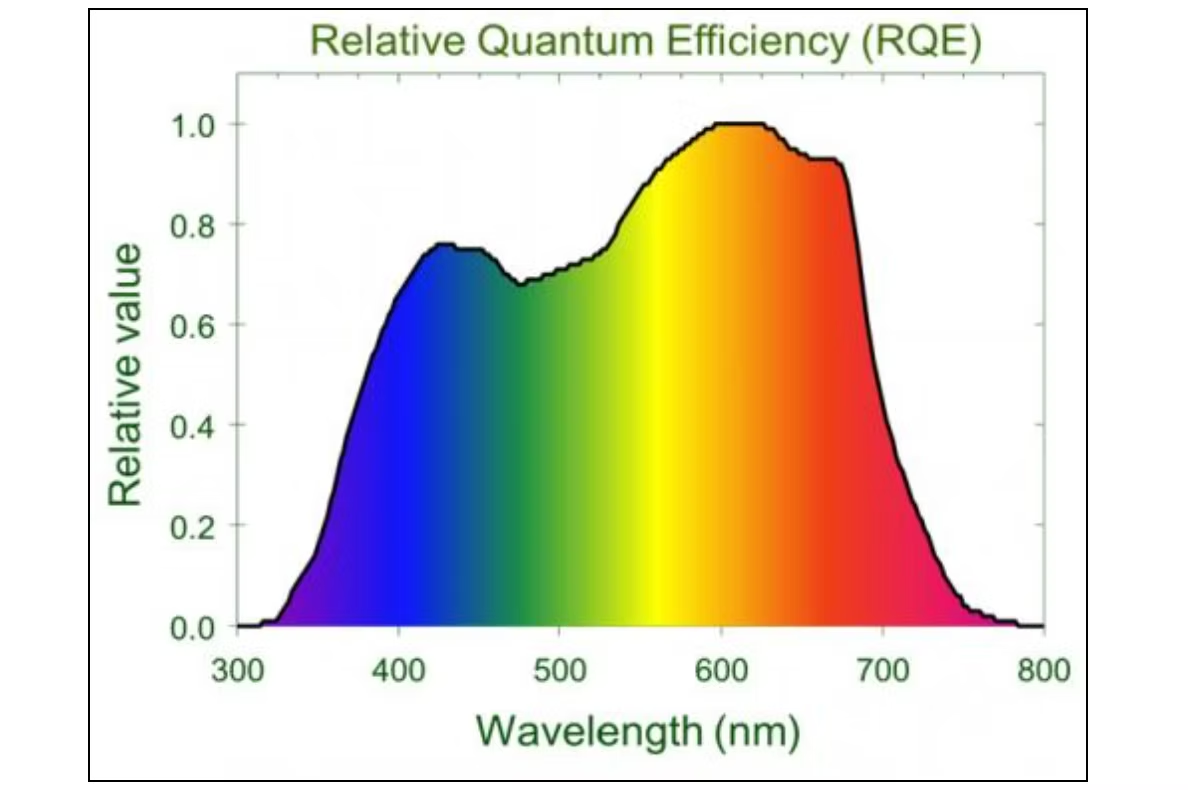
Relative quantum efficiency curve. (Adapted by Erik Runkle from McCree, 1972. Agric. Meteorology 9: 191-216.)
As part of a series of experiments conducted indoors, Michigan State University investigated how different light wavelengths (blue, green, and red) from LEDs affect seedling growth. Tomatoes named "Early Girl," sage plants named "Vista Red," petunias named "Wave Pink," and henna flowers named "SuperElfin XP Red" were grown in growing chambers at 68 degrees Fahrenheit and 160 µmol∙m∙2∙s∙1 for four to five weeks. Both LED and fluorescent lights were used. In the first experiment, the percentage of each monochromatic LED was as follows: M25% + Y25% + K50% (blue and green LEDs each accounted for 25% of the total light, red LEDs for 50%); M50% + Y50%; M50% + K50%; Y50% + K50%; K100%; and M100%. In this experiment, the blue LEDs produced light at 446 nm, the green LEDs at 516 nm, and the red and deep red LEDs at 634 and 664 nm wavelengths, respectively.
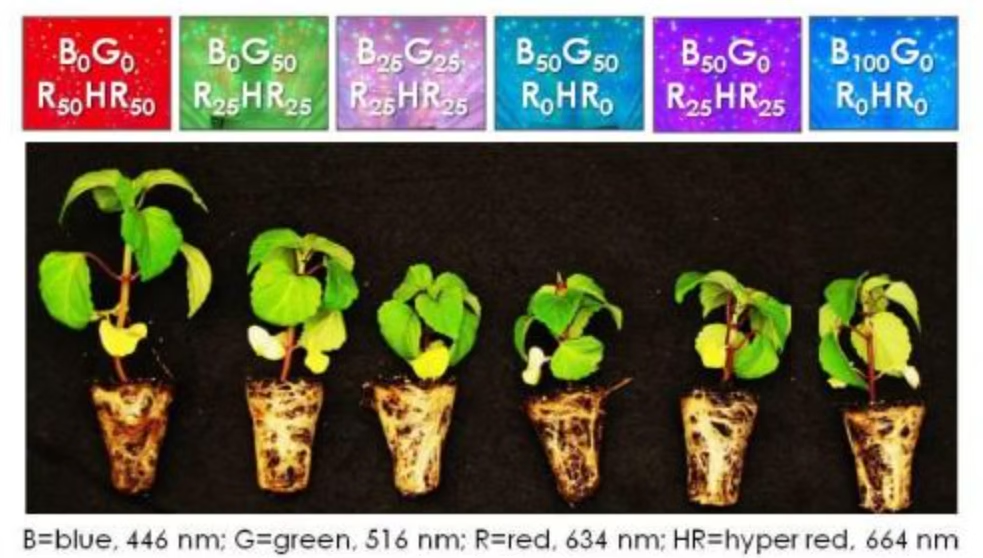
Plants grown under at least 25 percent blue light were 40 to 60 percent shorter than those grown under red light alone. Plants grown with 50 percent green and 50 percent red light were about 25 percent shorter than those grown under red light alone, but about 50 percent taller than all plants grown under more than 25 percent blue light. Therefore, blue light was found to suppress upward plant growth more than green light in an indoor environment. It was also found that 25 percent green light could easily replace the same percentage of blue light without affecting fresh weight.
In addition to leaf and stem development, noticeable differences were also observed in root growth. The root system of the plant grown under the spectrum where all wavelengths were used at 25% was significantly more developed compared to the others.
In the next experiment, plants were grown under blue (B), green (G), and red (R) LEDs and fluorescent lamps (FL) at the same intensity for four weeks. As coded in the previous paragraph, the number following each color represents the percentage of that color; for example, B50 + R50 means the plants were grown under 50 percent blue light and 50 percent red light.
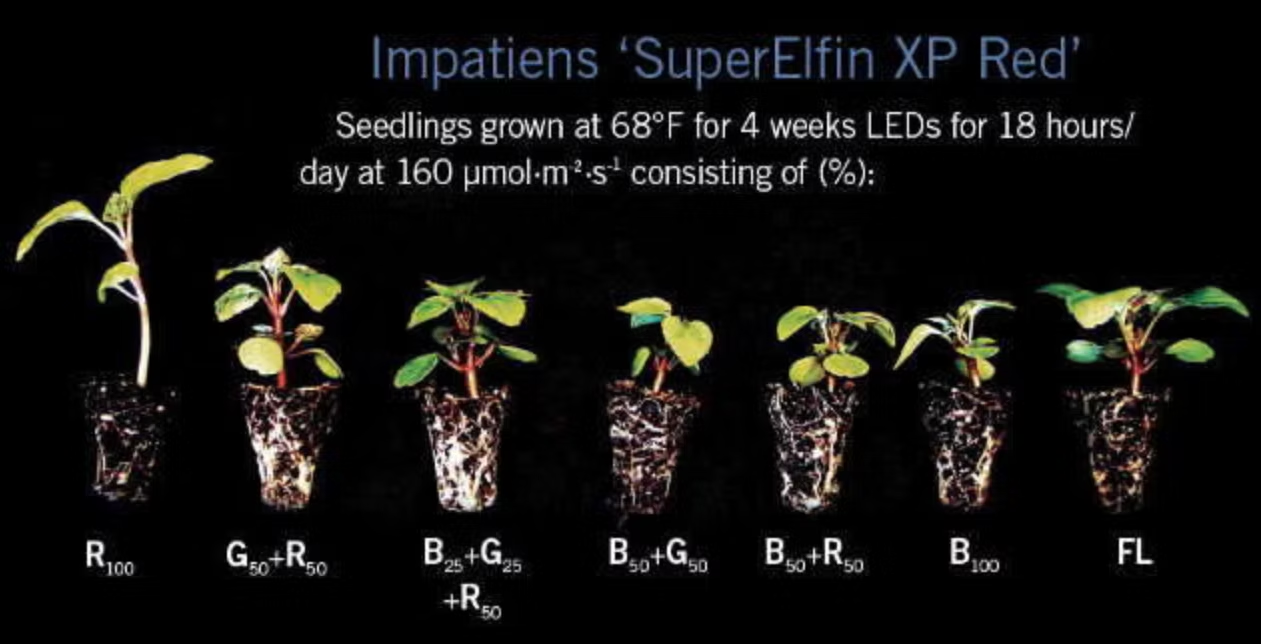
Plants grown under red light alone have a leaf area 50 to 130 percent larger than those grown under 25 percent or more blue light. Similarly, plants under red light alone have a fresh weight 50 to 110 percent higher than plants under 25 percent or more blue light.
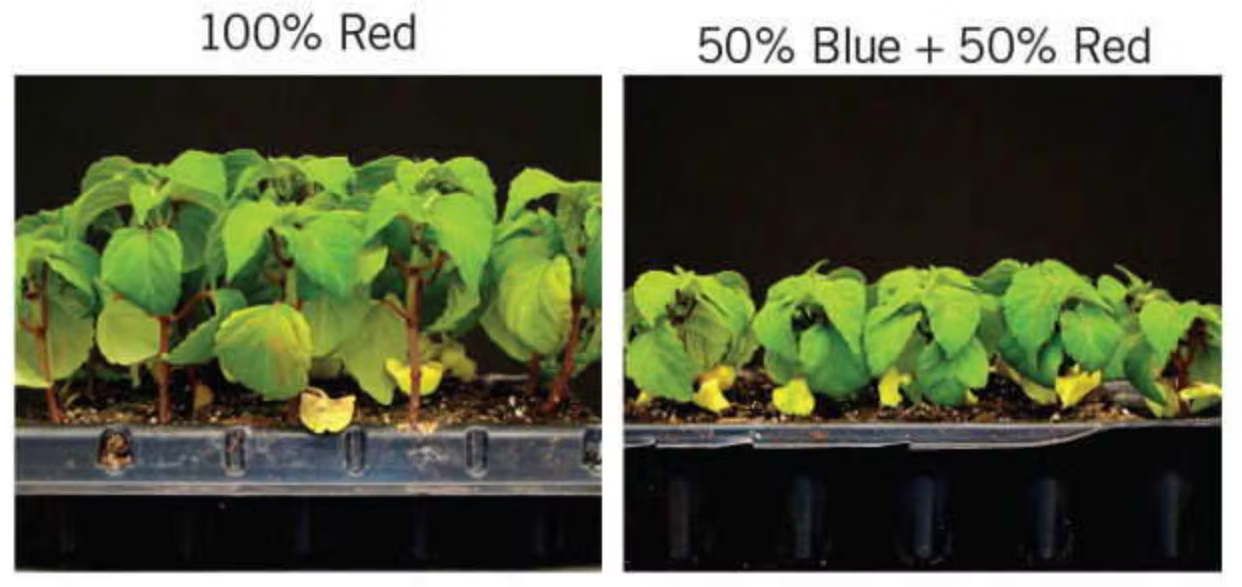
Plants grown under fluorescent lamps generally had similar fresh weight and leaf area to plants grown under red light alone, while their height was similar to plants under 50% green + 50% red light. Henna flowers were the only species that produced flower buds during the experiment, but only those under at least 25% blue light produced buds. The number of tomato leaflets developing edema was highest under red light, and edema decreased as the percentage of blue light increased.
In a third experiment, the same type of plants were grown for four weeks under varying percentages of blue and red light, at 160 µmol m⁻² s⁻¹. The monochromatic LEDs used were either all red (R100), all blue (B100), or in the following percentages: B6 + R94, B13 + R87, B25 + R75, and B50 + R50.
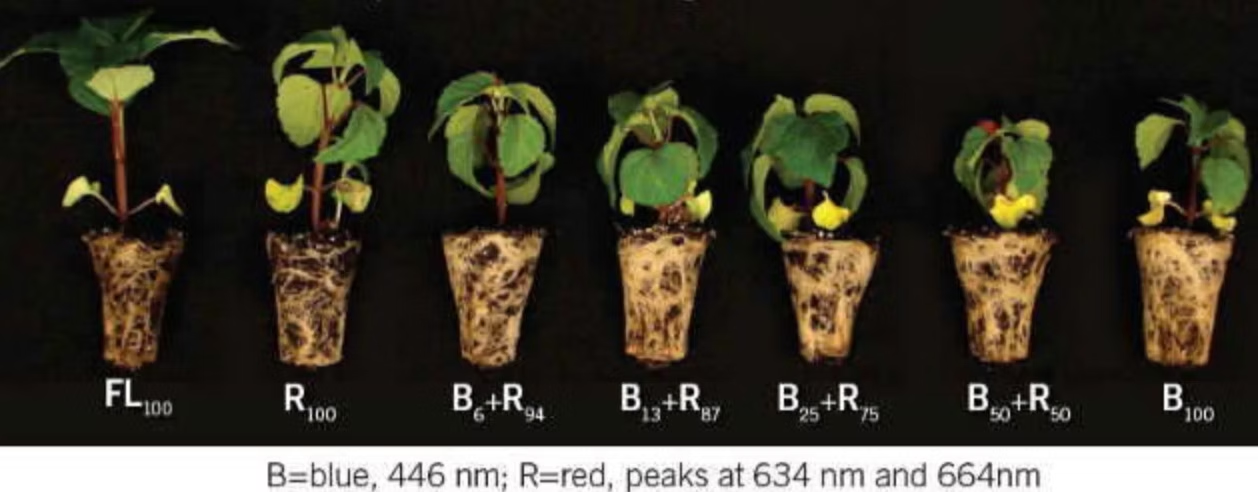
Red light was provided by two different red monochromatic LEDs, as in the previous experiment. Plants grown under at least 6 percent blue light were 25 to 50 percent shorter than plants without blue light. The leaves of henna, sage, and petunias were approximately twice as large when grown under red light alone compared to leaves on plants under at least 50 percent blue light. Similar to the second experiment, providing an increased percentage of blue light resulted in more flower buds in females and less edema in tomatoes.
Based on these observations and results, we can conclude that adding blue light to the spectrum will not accelerate stem elongation and leaf expansion; growing plants only under red light or a combination of red and green light can increase stem length and leaf size. As previously mentioned, 25 percent green light can replace 25 percent blue light without affecting fresh weight, but the plants will be taller. Adding blue light to a red-dominant environment demonstrated the positive effect of blue light on product quality, stimulating fruit-bearing functions in henna flowers and reducing the incidence of edema in tomatoes.
The ratio of blue and red light can be adjusted to produce seedlings with desired leaf sizes and stem lengths. Red light increases leaf size and stem length, resulting in plants with the greatest biomass. Grow lights containing only blue light produced more compact plants, and the produce from these plants generally had higher horticultural quality, but the leaves were smaller. From this, we can conclude that using other colors in the right balance along with blue light is necessary to obtain larger leaves and high-quality produce.
Other potential advantages of including green light in the spectrum are reducing eye strain for workers and improving visual clarity. Under monochromatic or sometimes two-color light (such as blue and red), plants will not appear in their normal colors, making it difficult to detect nutritional, disease, or pest problems. Another potential advantage of green light is its ability to penetrate the canopy better than other light wavelength bands. With better canopy penetration, it is possible for lower leaves to continue photosynthesizing, leading to less loss of lower leaves. The difference in quality and weight of produce from the lower regions will be noticeable.
You can use this information to shape plants with your desired structural characteristics, but this cannot be done perfectly using the products of most competing lighting companies. Light spectrums must be engineered to maximize crop yield, as we do at LEDWisdom. Using correctly selected full-spectrum LEDs is necessary to achieve the perfect spectrum and brightness formula. Adding the right proportions of red monochromatic LEDs can be considered the most efficient spectrum enhancement. We hope that the observations and results we have shared demonstrate that all the light produced by our full-spectrum grow lights is used for photosynthesis. We offer our LEDWisdom grow light formula to help you grow your plants correctly and optimally in both horizontal and vertical axes.
References;
1- Heidi Wollaeger, M., & Erik Runkle, M. (2018, September 25). Green light: Is it important for plant growth? Retrieved October 25, 2020, from https://www.canr.msu.edu/news/green_light_is_it_important_for_plant_growth
2- McCree, KJ (1972) The Action Spectrum, Absorptance and Quantum Yield of Photosynthesis in Crop Plants. Agricultural Meteorology, 9, 191-216.
3- Runkle, H., Sofia Flores | Rosanna Freyre | Paul Fisher, Wright, J., Fisher, |., Gallagher, A., Heidi Lindberg ([email protected]) is a former graduate research assistant and now educator with Michigan State University (MSU) Extension. See all author stories here., . . . Says:, B. (2016, August 26). Growing Seedlings Under LEDs: Part Two. Retrieved October 25, 2020, from https://www.greenhousegrower.com/production/plant-culture/growing-seedlings-under-leds-part-two/